

Turkish Water Institute (SUEN), in collaboration with COMSTECH (Committee on Scientific and Technological Cooperation of the Organization of Islamic Cooperation) and the General Directorate of Water Management (GDWM), organized a hybrid training program on “Water Governance and Integrated Water Resources Management: Principles, Practices, and Tools” for experts from the Member States of the Organization of Islamic Cooperation (OIC) on 9-10 June 2026.
During the training program, which was inaugurated by Prof. Dr. Lütfi Akca, President of SUEN and Prof. Dr. Muhammad Iqbal Choudhary, Coordinator General of COMSTECH, and attended by approximately 150 experts and managers from public institutions, academia, and relevant organizations across OIC Member States, presentations were delivered by SUEN and GDWM experts, followed by discussions and exchanges of views on the following topics:
· Principles of good water governance
· Fundamentals of Integrated Water Resources Management (IWRM) and river basin-based water resources management
· Türkiye’s experiences and initiatives in water governance and IWRM, including:
River basin management planning
Sectoral water allocation planning
Flood and drought management
Early warning systems
Benchmarking of performances of water and sewerage utilities
Transboundary water governance and cooperation
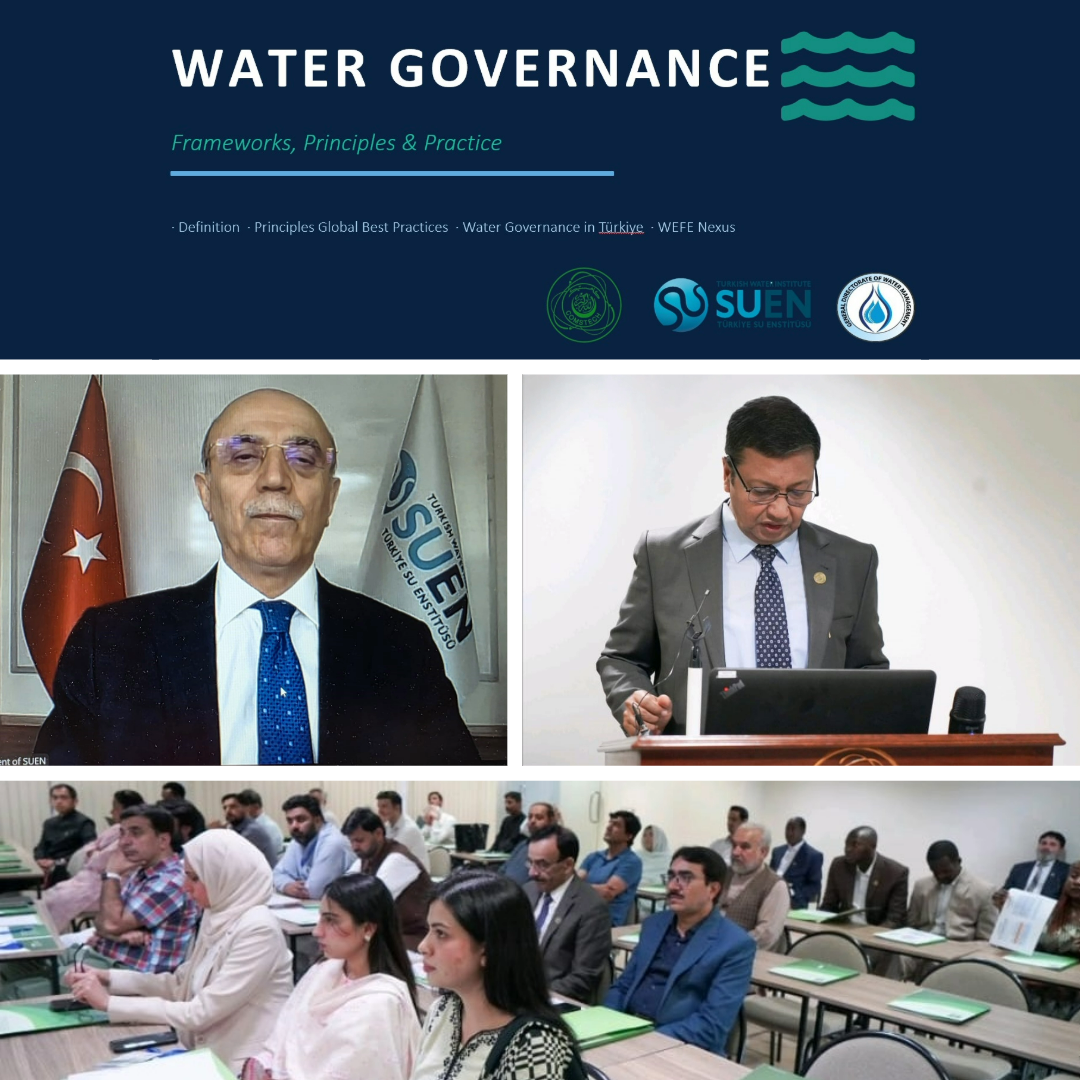
In his opening remarks, SUEN President Prof. Dr. Lütfi Akca highlighted that growing water challenges driven by climate change, urbanization, and increasing demand require strong water governance alongside technical solutions. He emphasized the importance of governance, institutional capacity and international cooperation in achieving sustainable water management. Prof. Akca also noted that knowledge sharing and capacity-building among OIC member countries are essential for addressing common water challenges and strengthening regional cooperation.
The program aimed to strengthen knowledge and experience sharing among OIC Member States, contribute to institutional capacity development in the field of sustainable water resources management, and enhance cooperation among countries. In this sense, participants were also presented with experiences and good practices related to integrated water resources management by experts from Bangladesh, Malaysia and Pakistan.